Standing Water Extraction
Pumps, wet vacuums, and professional extraction tools remove accessible water based on depth, surface type, and site conditions.
Serving Long Beach, California & surrounding areas
Fast extraction, moisture checks, and controlled drying help limit damage after a leak, overflow, or indoor flooding.

Water Removal Long Beach CA service should begin as soon as the source is stopped and the area is safe to enter. Standing water can move under baseboards, into wall cavities, beneath flooring, and through openings around plumbing. Removing what is visible is only the first step. The affected materials also need to be checked for trapped moisture and dried under controlled conditions.
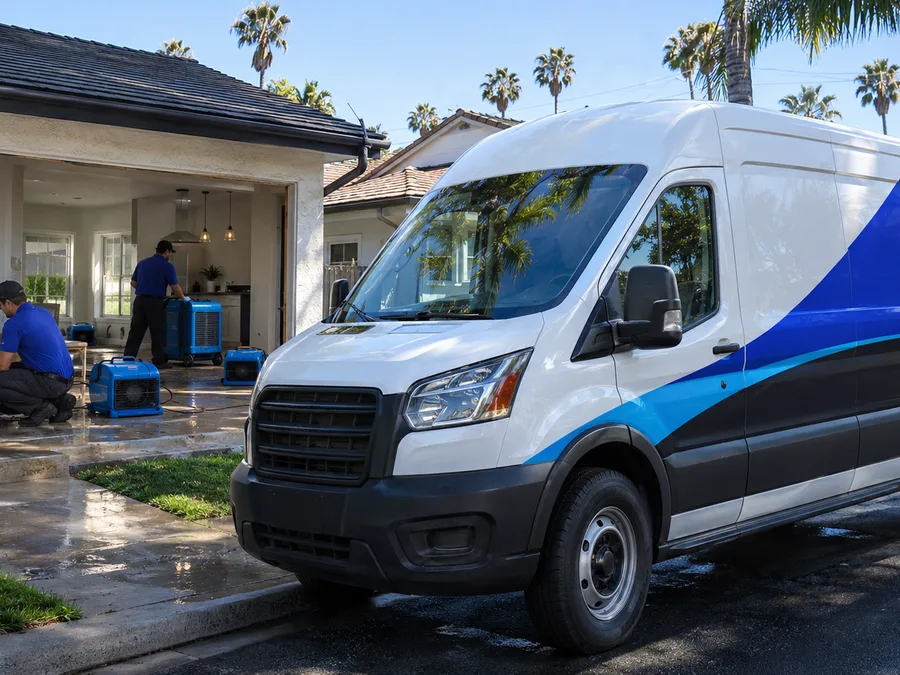
Flood Damage Long Beach CA handles extraction with equipment selected for the surface and volume involved. Before setting a drying plan, Long Beach's trusted flood damage team focuses on finding the actual boundaries of the wet area. That may include moisture readings in drywall and wood, extraction from carpet and pad, removal of water from hard flooring, and airflow directed across damp structural materials.
Water intrusion can follow a supply-line leak, appliance overflow, roof opening, backed-up fixture, or stormwater entry. The source and water category affect what can be dried and what may need to be removed. Clean water from a supply line is handled differently from water containing sewage, outdoor contaminants, or prolonged microbial growth. If electricity, a sagging ceiling, or contaminated water creates a hazard, stay out of the affected area until it has been assessed.
A proper water removal job starts with a visual inspection and moisture mapping. Technicians use moisture meters to compare affected materials with dry reference areas. Thermal imaging may help locate temperature patterns associated with moisture, but those findings are confirmed with a meter because an infrared camera does not measure water directly.
Portable or truck-mounted extractors remove standing water from accessible surfaces. Weighted extraction tools may be used on saturated carpet, while hard-surface tools collect water from tile, concrete, or resilient flooring. Baseboards or small portions of damaged material may need to be removed when they block access to wet cavities. Decisions depend on contamination, material condition, and whether effective drying is possible.
Extraction matters because liquid water is faster to remove mechanically than by evaporation. After extraction, air movers promote evaporation and dehumidifiers collect moisture from the air. Daily or scheduled readings show whether materials are moving toward a dry standard. Equipment should remain positioned according to those readings rather than being removed simply because surfaces feel dry.

Pumps, wet vacuums, and professional extraction tools remove accessible water based on depth, surface type, and site conditions.
Readings identify damp drywall, framing, flooring, and other materials that may look dry on the surface.
Air movers and dehumidifiers are placed to manage evaporation and humidity without relying on ordinary household fans.
The water source and affected materials are evaluated before deciding what can be cleaned, dried, or removed.
Moisture measurements, equipment placement, and observed conditions can be documented as the drying work progresses.
Extraction plans can be adapted for homes, apartments, offices, retail spaces, and other occupied properties.
The first priority is addressing active water when it can be done safely. Electrical hazards, contaminated water, unstable ceilings, and slippery surfaces are considered before entry.
The affected rooms and adjoining areas are checked to determine how far water traveled, including beneath flooring and behind finish materials where access permits.
Standing water is removed with pumps or extraction equipment. Saturated carpet and pad may receive repeated extraction passes to reduce the water load.
Air movers create airflow across wet surfaces, while dehumidifiers lower moisture in the air. Equipment selection depends on room volume, material porosity, and current readings.
Temperature, relative humidity, and material moisture are tracked. Equipment may be repositioned as some areas dry faster than others.
The drying phase ends when target materials reach an appropriate dry standard or when remaining damaged materials are identified for removal.
Long Beach has varied building types within a compact coastal city, so access and construction details can change the extraction plan. In Belmont Shore, closely spaced properties and limited staging space can affect hose routes and equipment placement. Downtown Long Beach includes multi-unit and commercial buildings where water may travel between floors or into shared walls, making coordination with property management important.
California Heights is known for older residential architecture, where plaster, wood flooring, built-ins, and enclosed wall cavities may require careful moisture checks. Naples properties may have tight lots and finished lower-level areas where equipment access needs to be planned. In East Long Beach, slab-on-grade homes can conceal moisture beneath carpet, laminate, or resilient flooring even when the slab itself appears dry.
Coastal humidity can slow evaporation when indoor conditions are not controlled. Opening windows is not always helpful because outdoor air may add moisture to the drying area. A dehumidifier creates a more stable drying environment, while moisture readings determine whether airflow and equipment placement need adjustment.
Stop the water source if you can do so without entering a hazardous area. For a plumbing leak, that may mean closing an accessible fixture valve or the property's main shutoff. Avoid contact with water near outlets, appliances, electrical panels, or ceiling fixtures. Do not enter a room with a bulging ceiling.
Move people and pets away from the affected area. If the water is clean and conditions are safe, pick up dry belongings near the edge of the wet area and place foil or plastic beneath furniture legs. Avoid using a household vacuum on standing water. Do not disturb materials if sewage, stormwater, or an unknown contaminant may be present.
Take photographs of the source and affected rooms when it is safe. Save invoices and note when the water was discovered. Property owners may also notify their insurance carrier promptly, since coverage and documentation requirements vary by policy. Renters should inform the property owner or manager because access to building systems and authorization for work may be required.
An indoor leak may also damage finishes or assemblies after extraction is complete. When broader property needs arise, Flood Damage Long Beach CA can discuss the conditions observed during water removal without allowing unrelated work to delay urgent extraction.
Professional water removal in Long Beach typically costs about $1,000 to $5,000 for a contained residential loss, while extensive flooding, contamination, or water affecting several rooms can cost more. Small extraction-only jobs may fall below that range, but structural drying adds equipment and monitoring time.
Final price depends on water depth, affected square footage, water category, floor coverings, access, demolition needs, and the number of drying days. Insurance coverage varies by cause and policy terms. The exact cost is confirmed after an on-site inspection defines the affected materials and work required.
Quick removal can reduce absorption into walls, flooring, and contents, helping prevent a contained incident from spreading into a larger drying and repair project.
Coverage depends on the source and policy. Sudden plumbing or appliance failures may be covered, while rising groundwater usually requires separate flood insurance. The carrier makes the coverage decision.
Prompt extraction can reduce how far water spreads and give the drying process a better start. Describe what happened, where the water traveled, and whether the source has been stopped.
Call Now (562) 337-3505Water removal should begin as soon as the source is controlled and the property is safe to enter. Water can migrate beneath flooring and into walls even after the visible flow stops. In multi-unit buildings around Downtown Long Beach, early coordination with a manager may also help identify whether adjoining units or common areas need inspection.
Structural drying often takes several days, but the actual time depends on saturation, materials, airflow, humidity, and how quickly extraction began. Dense materials and enclosed cavities may take longer than exposed surfaces. Moisture readings, rather than a fixed calendar estimate, determine when drying equipment can be removed.
Some flooring can be dried, but the decision depends on the water category, installation method, material condition, and time exposed. Clean-water carpet may be recoverable when extraction begins promptly, while contaminated carpet and pad often require removal. Laminate and engineered products can swell or separate, and moisture may remain trapped beneath resilient flooring.
Yes, extraction and drying can be planned for apartments, offices, retail spaces, and other commercial properties. Shared walls, occupied areas, elevator access, parking, and building rules can affect the setup. Long Beach property managers should identify authorized contacts early so access and work approvals do not slow the response.
Coverage depends on the cause of the water and the terms of the policy. Sudden and accidental interior leaks may be treated differently from maintenance issues, groundwater, or flooding from outside. The carrier decides coverage, so document the source and visible damage, keep work records, and review any emergency-service requirements in the policy.
You may still need professional drying when water has soaked into porous materials or hidden cavities. Damp drywall, carpet pad, cabinets, subfloors, and wall insulation can hold moisture after the surface water disappears. Moisture mapping can determine whether extraction, dehumidification, selective access, or simple monitoring is appropriate.
Household fans and open windows are not reliable for a significant water loss because they do not control humidity or confirm hidden moisture. Long Beach's coastal air may be humid enough to slow drying on some days. Professional setups pair directed airflow with dehumidification and verify progress using material moisture readings.
Share the water source, affected rooms, and current conditions. Flood Damage Long Beach CA can assess the moisture, explain the recommended extraction and drying work, and provide a scope based on what the property needs.